
Waxing is one of the most effective ways to achieve long-lasting smooth skin, but dealing with post-wax bumps and ingrown hairs can quickly ruin the results. An ingrown hair occurs when a regrowing hair curls back into the skin or gets trapped beneath a layer of dead skin cells, leading to inflammation, redness, and uncomfortable bumps.
Because waxing removes hair directly from the root, proper skin prep and targeted aftercare are vital to ensuring your hair grows back up and out naturally. Follow this step-by-step guide to keep your skin smooth, clear, and ingrown-free.
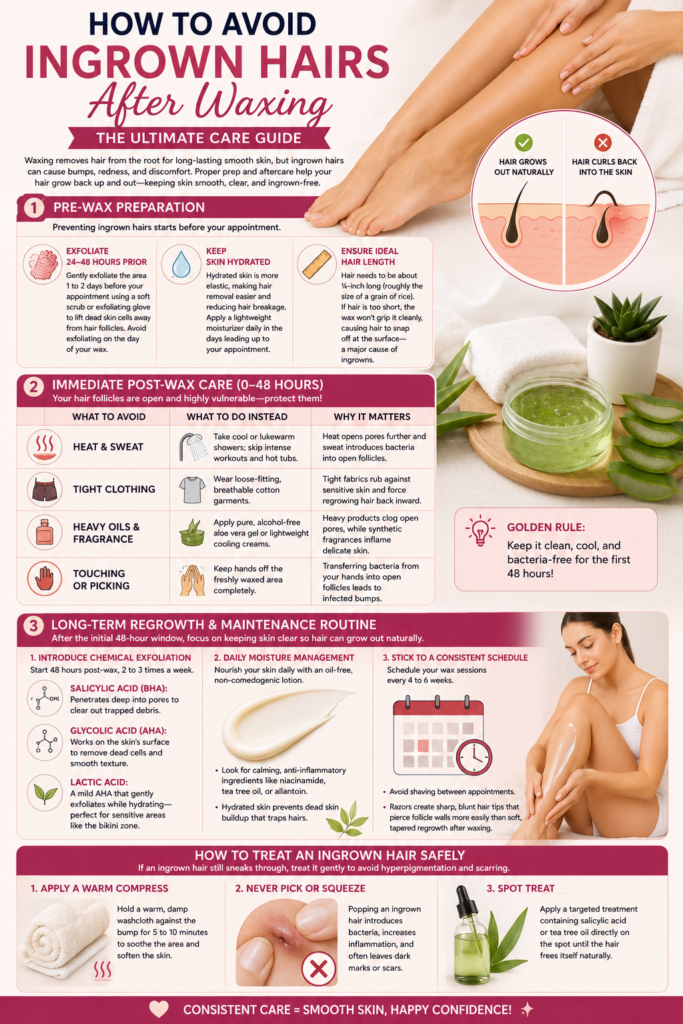
Step 1: Pre-Wax Preparation
Preventing ingrown hairs starts well before your waxing appointment. Preparing your skin ensures the wax adheres to the hair rather than the skin, resulting in a cleaner pull from the root.
- Exfoliate 24 to 48 hours prior:
Gently exfoliate the area 1 to 2 days before your appointment using a soft physical scrub or an exfoliating glove. This lifts dead skin cells away from hair follicles. Avoid exfoliating on the day of your wax to prevent unnecessary skin sensitivity.
- Keep skin hydrated:
Hydrated skin is more elastic, making hair removal easier and reducing hair breakage. Apply a lightweight moisturizer daily in the days leading up to your appointment.
- Ensure ideal hair length:
Hair needs to be about ¼-inch long (roughly the size of a grain of rice). If hair is too short, the wax won’t grip it cleanly, causing the hair to snap off at the surface rather than coming out by the root—a primary trigger for ingrowns.
Step 2: Immediate Post-Wax Care (0–48 Hours)
During the first 48 hours after waxing, your hair follicles remain wide open and highly vulnerable to irritation and bacterial buildup. Taking the right precautions immediately after your session makes a major difference.
| What to Avoid | What to Do Instead | Why It Matters |
| Heat & Sweat | Take cool or lukewarm showers; skip intense workouts and hot tubs. | Heat opens pores further and sweat introduces bacteria into open follicles. |
| Tight Clothing | Wear loose-fitting, breathable cotton garments. | Tight fabrics rub against sensitive skin and force regrowing hair back inward. |
| Heavy Oils & Fragrance | Apply pure, alcohol-free aloe vera gel or lightweight cooling creams. | Heavy products clog open pores, while synthetic fragrances inflame delicate skin. |
| Touching or Picking | Keep hands off the freshly waxed area completely. | Transferring bacteria from your hands into open follicles leads to infected bumps. |
Step 3: Long-Term Regrowth & Maintenance Routine
Once the initial 48-hour recovery window passes, shift your focus to maintaining a clear skin surface so fine, regrowing hairs can easily break through.
1. Introduce Chemical Exfoliation
Physical scrubs can sometimes be too abrasive for freshly waxed skin. Switch to gentle chemical exfoliants 2 to 3 times a week starting 48 hours post-wax. Chemical exfoliants dissolve the dead skin cells that block pore openings:
- Salicylic Acid (BHA): Oil-soluble, allowing it to penetrate deep inside the pore to clear out trapped debris.
- Glycolic Acid (AHA): Works on the skin’s surface to sweep away dead cells and smooth texture.
- Lactic Acid: A mild AHA that offers gentle exfoliation alongside hydrating benefits, making it ideal for sensitive zones like the bikini area.
2. Daily Moisture Management
Dry skin acts as a rigid barrier that traps soft hair beneath the surface. Nourish your skin daily with an oil-free, non-comedogenic lotion. Look for calming, anti-inflammatory ingredients like niacinamide, tea tree oil, or allantoin.
3. Stick to a Consistent Schedule
Schedule your wax sessions every 4 to 6 weeks. Avoid shaving between appointments; razors create sharp, blunt hair tips that pierce follicle walls much more easily than the soft, tapered regrowth that follows waxing.
How to Treat an Ingrown Hair safely
If an ingrown hair still sneaks through, treat it gently to avoid hyperpigmentation and scarring:
- Apply a warm compress: Hold a warm, damp washcloth against the bump for 5 to 10 minutes to soothe the area and soften the skin.
- Never pick or squeeze: Popping an ingrown hair introduces bacteria, increases inflammation, and often leaves dark marks or permanent scars.
- Spot treat: Apply a targeted treatment containing salicylic acid or tea tree oil directly on the spot until the hair frees itself naturally.