
The term facial covers everything from a quick 30-minute deep-pore cleanse at a local salon to a lavish, two-hour holistic wellness ritual at a day spa. While both treatments aim to improve your skin’s health, their core philosophy, execution, environment, and long-term goals differ significantly.
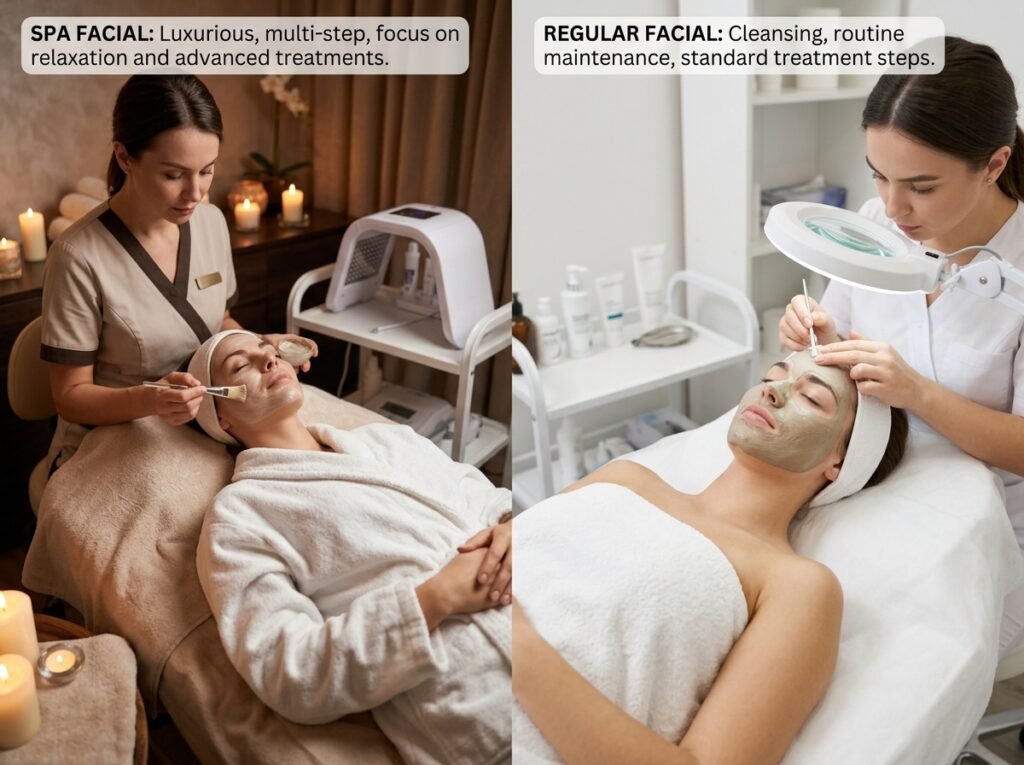
A regular facial (often called a standard, basic, or European facial) focuses primarily on immediate surface hygiene—clearing pores and exfoliating dead skin cells. In contrast, a spa facial integrates advanced skin-nourishing formulations with holistic sensory therapies (like lymphatic drainage massage and aromatherapy) to address skin health and nervous system relaxation simultaneously.
1. Spa Facial vs. Regular Facial vs. Medical Facial
| Feature | Regular / Basic Facial | Spa Facial | Clinical / Medical Facial |
| Primary Goal | Surface maintenance, basic pore cleansing, and light hydration. | Holistic relaxation, sensory stress relief, and deep skin nourishment. | Targeted correction of skin conditions (acne, hyperpigmentation, scarring). |
| Environment | Standard treatment room or salon aesthetician station. | Dimly lit spa setting with soothing music, hot towels, and aromatherapy. | Clean, clinical setting (medspa or dermatologist office). |
| Technique & Tools | Steam, manual extractions, basic scrubs, and cream masks. | Facial sculpting, lymphatic drainage, specialized massage, and luxury masks. | Microdermabrasion, chemical peels, LED light therapy, micro-needling. |
| Products Used | Standard over-the-counter or basic professional lines. | High-end botanical, organic, or spa-exclusive skincare lines. | Medical-grade active ingredients (retinoids, high-percentage acids). |
| Downtime | None; slight temporary redness from extractions. | None; immediate, healthy glow and relaxed complexion. | Possible mild peeling, flaking, or redness for 1–3 days. |
2. Step-by-Step Experience: What Happens During a Spa Facial
A spa facial is carefully structured to transition your mind into rest while working active ingredients into your skin:
- Skin Analysis & Aromatherapy Welcome:
Analyzes skin type and sets the sensory atmosphere.
Your aesthetician evaluates your skin barrier, oil levels, and sensitivity under a magnifying lamp. The session opens with inhaled essential oils (like lavender or eucalyptus) and deep breathing to calm your nervous system.
2. Double Cleansing & Warm Towel Prep:
Removes surface buildup without stripping natural oils.
An oil-based cleanser dissolves makeup and SPF, followed by a gentle water-based cleanser. Steamed, essential-oil-infused towels are wrapped around your face to open pores and soften skin.
3. Exfoliation & Gentle Extraction:
Lifts dull surface cells using gentle enzymes or fine scrubs.
Rather than harsh mechanical squeezing, spa facials rely on fruit enzyme peels (like papaya or pineapple) or soft scrubs, followed by light manual extractions only where necessary.
4. Targeted Facial & Decollete Massage:
Stimulates circulation and promotes lymphatic drainage.
The signature phase of a spa facial: rhythmic facial massage techniques (sometimes using gua sha or ice globes) relax facial muscles, reduce puffiness, and boost blood flow across your face, neck, and shoulders.
5. Customized Mask & Hand/Arm Treatment:
Infuses concentrated nutrients while you rest.
A rich cream, hydrojelly, or sheet mask tailored to your skin concerns is applied. While the mask sets, your therapist performs a relaxing arm, hand, or scalp massage.
6. Hydration & Sun Protection:
Locks in moisture and protects the fresh skin barrier. The treatment finishes with targeted serums (like hyaluronic acid or vitamin C), a rich moisturizer, eye cream, and broad-spectrum SPF.
3. Which Facial Is Right for You?
- Choose a Regular Facial if: You want a straightforward, budget-friendly cleanup to clear out clogged pores and keep up with basic skin hygiene every few weeks.
- Choose a Spa Facial if: You are dealing with stress-induced skin dullness, want to improve circulation and reduce facial tension, or want to combine a pampering wellness experience with a radiant glow.
- Choose a Medical Facial if: You are targeting stubborn clinical concerns like cystic acne, deep hyperpigmentation, fine lines, or texture irregularities that require active medical-grade ingredients.
4. How to Extend Your Facial Results at Home
- Hold Off on Heavy Makeup: Give your pores 12–24 hours to breathe before applying full-coverage foundation.\
- Pause Active Acids for 48 Hours: Avoid strong exfoliants like AHA/BHA toners, glycolic pads, or retinoids right after a facial to prevent irritation.
- Prioritize Hydration & Sunscreen: Drink plenty of water to help flush out toxins released during facial massage, and apply SPF daily to protect freshly exfoliated skin cells.