
Waxing offers long-lasting, silky-smooth results, but for many people, the anticipation of pain can make the experience intimidating. The good news is that waxing pain is not an unavoidable given—it is a physical response that you can dramatically minimize with the right preparation, proper technique, and smart aftercare.
After analyzing top professional esthetician guides and beauty industry standards, we have compiled the ultimate guide to making your waxing routine as comfortable, gentle, and pain-free as possible.
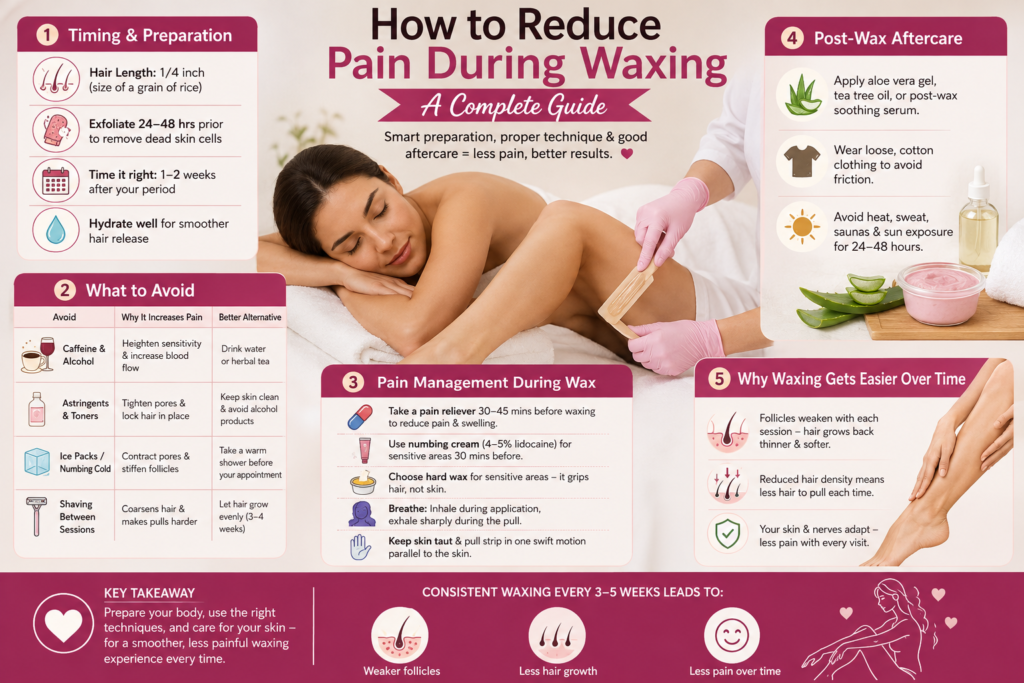
1. Timing & Preparation (24–48 Hours Before)
Pain reduction starts long before the wax strip ever touches your skin. Preparing your body and hair creates optimal conditions for clean hair removal without pulling at delicate skin tissue.
- Check Your Hair Length (The “Goldilocks” Rule): Hair should be approximately ¼ inch long (about the size of a grain of rice). If hair is too short, the wax grips and pulls at the skin instead of the follicle; if it is too long, the tugging sensation increases exponentially.
- Exfoliate 24–48 Hours Prior: Use a gentle body scrub or exfoliating mitt one to two days before your appointment. This lifts trapped hairs and removes dead skin cells around the pore, allowing the wax to grab only the hair shaft. Note: Avoid exfoliating on the exact day of waxing to prevent raw, sensitive skin.
- Time Around Your Menstrual Cycle: Schedule your session 1 to 2 weeks after your period ends. Hormonal shifts immediately before and during your cycle increase skin sensitivity and lower your overall pain threshold.
- Hydrate Internally: Drink plenty of water in the 24 hours leading up to your session. Well-hydrated skin releases hair follicles much more smoothly than dehydrated skin.
2. What to Avoid Right Before Your Appointment
Certain everyday habits inadvertently heighten nerve endings and tighten pores, making hair removal far more painful than necessary:
| Avoid | Why It Increases Pain | Better Alternative |
| Caffeine & Alcohol | Stimulants narrow blood vessels, increase blood flow, and heighten nervous sensitivity. | Drink water or herbal tea before your appointment. |
| Astringents & Toners | Alcohol-based toners shrink and tighten pores, locking hair in place. | Leave skin clean and free of harsh alcohol products. |
| Ice Packs / Numbing Cold | Cold temperatures contract pores and stiffen hair follicles, increasing resistance during removal. | Take a warm shower 30 minutes prior to relax pores and soften hair. |
| Shaving Between Sessions | Shaving coarsens the hair tip and disrupts the growth cycle, making future pulls harder. | Allow hair to grow evenly between sessions (3–4 weeks). |
3. Pain Management Strategies During the Wax
Applying smart physical and mental techniques during the service can cut discomfort in half;
Take an Over-the-Counter Pain Reliever
Taking an anti-inflammatory like ibuprofen or acetaminophen 30 to 45 minutes before your session dulls pain receptors and helps minimize post-wax swelling.
Use Topical Numbing Creams for Sensitive Zones
For high-sensitivity areas like the bikini line, upper lip, or underarms, apply a OTC 4%–5% lidocaine numbing cream 30 minutes before waxing. Clean the area right before wax application so the product doesn’t interfere with wax adherence.
Choose Hard Wax Over Soft Wax
- Hard Wax (Strip-Less): Shrink-wraps around the hair shaft without adhering to the skin. It is ideal for coarse hair and sensitive areas like the face, underarms, and bikini.
- Soft Wax (Strip Wax): Sticks to both hair and the top layer of skin, which creates more surface trauma. Save soft wax for larger, less sensitive areas like legs or arms.
Master the Controlled Exhale
Tensing up or holding your breath locks tightness into your muscles. Practice rhythmic breathing: inhale slowly as the wax is applied, and exhale sharply right as the strip is pulled. This activates your parasympathetic nervous system, lessening the brain’s pain perception.
Anchor the Skin Taut
If waxing at home, always use your free hand to stretch the skin completely flat and taut in the opposite direction of the pull. Remove the strip in one swift, confident motion parallel to the skin—never pull upward away from the body.
4. Post-Wax Aftercare: Soothing & Protecting Skin
What you do in the first 24 to 48 hours determines how quickly your skin calms down:
- Apply a Cooling Calming Serum: Immediately use non-comedogenic aloe vera gel, tea tree oil, or specialized post-wax oils enriched with Vitamin E to calm red follicles.
- Wear Loose Cotton Clothing: Avoid tight synthetic fabrics (like leggings or skinny jeans) that rub against fresh, open pores and trap sweat.
- Skip Heat and Heavy Sweat: Avoid hot baths, saunas, steam rooms, direct sunlight, and intense workouts for 24–48 hours to prevent bacteria from entering open pores.
5. Why Waxing Gets Easier Over Time
If you are a beginner, remember that your first session will always be the most uncomfortable. With consistent waxing every 3 to 5 weeks:
- Follicles Weaken: Repeated extraction weakens the hair root, causing hair to regrow thinner, softer, and sparser.
- Reduced Hair Density: Fewer hairs grow back in each cycle, meaning future sessions pull significantly less volume.
- Pores Adapt: Over time, your skin becomes accustomed to the sensation, dropping self-reported pain scores dramatically by your third or fourth appointment.