
Finding head lice can trigger immediate stress, but an infestation isn’t a sign of poor hygiene—lice actually prefer clean hair to lay their eggs. Eliminating them quickly requires breaking their reproduction lifecycle.
Head lice (Pediculus humanus capitis) pass through three main stages: nits (tiny teardrop eggs glued securely to the hair shaft near the scalp), nymphs (newly hatched baby lice), and adults (full-grown crawling insects). Because most treatments kill active bugs but leave stubborn nits intact, effective removal requires a combined approach of targeted treatment and diligent physical removal.
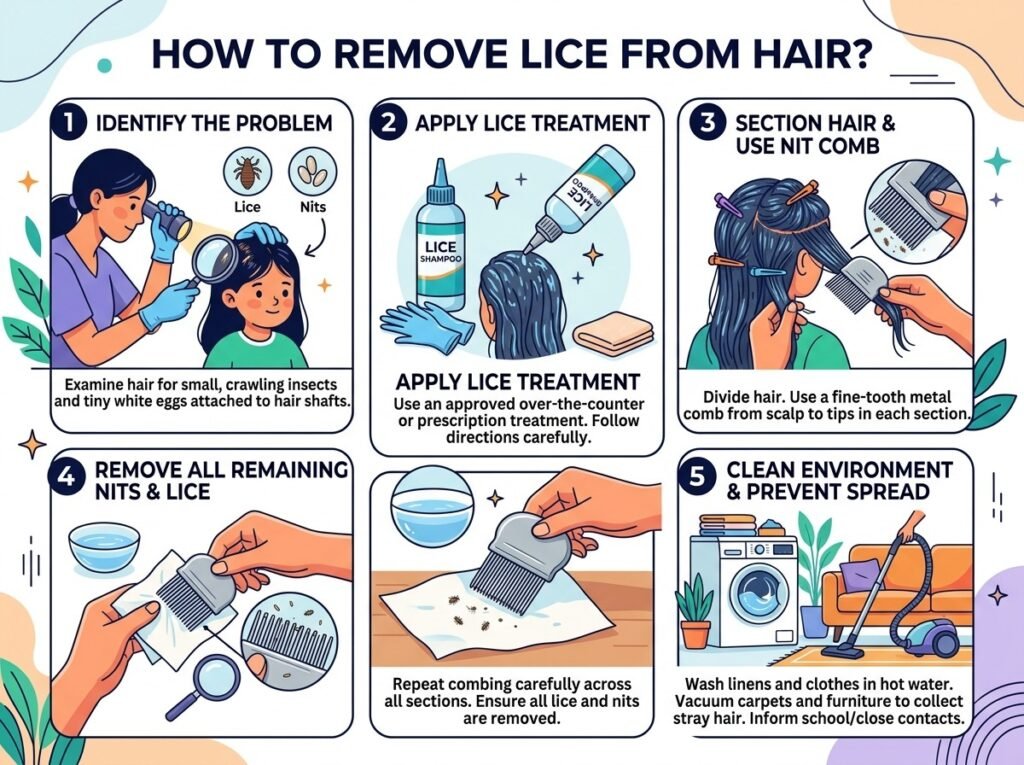
Comparing Proven Head Lice Removal Methods
Not all lice treatments work the same way. Understanding your options helps you pick the right strategy while minimizing unnecessary exposure to harsh chemicals:
| Method | How It Works | Kill Target | Success Rate & Considerations |
| OTC Pediculicides (Permethrin 1%, Pyrethrins) | Neurotoxic paralysis of the adult insect’s nervous system. | Adult lice & nymphs | Widely available; however, “super lice” have developed resistance in some regions. |
| Physical Suffocants (Dimethicone lotion) | Coats and plugs the insect’s breathing spiracles (air tubes). | Adult lice, nymphs & emerging larvae | High efficacy. Bugs cannot build chemical resistance to mechanical suffocation. |
| Wet Combing (Fine-Tooth Metal Nit Comb) | Physical extraction of live bugs and egg casings from the shaft. | All stages (Nits, nymphs, adults) | Safe for young toddlers and sensitive scalps; requires patience and repeating over 2 weeks. |
| Prescription Medications (Ivermectin, Spinosad, Malathion) | Advanced chemical or natural-fermentation neurotoxins. | Nits, nymphs & adult lice | High single-treatment success; reserved for resistant cases or failed OTC treatments. |
Step-by-Step Wet Combing & Removal Protocol
Physical extraction with a fine-tooth metal nit comb is essential after applying any treatment, as unhatched eggs will cause a resurgence days later.
- Saturate Hair with Conditioner:
Immobilizes adult lice and allows smooth gliding without hair breakage.
Wash the hair with regular shampoo, rinse, and apply a thick, generous amount of hair conditioner from root to tip. Do not rinse the conditioner out—the creamy texture temporarily paralyzes crawling lice and lubricates the hair shaft.
2. Section Hair into Small 1-Inch Parts:
Ensures thorough coverage across the entire head without missing spots.
Detangle hair completely with a normal brush. Divide the hair into small, manageable 1-inch sections using clips. Working systematically from one side of the head to the other prevents skipping infested areas.
- Comb From Scalp to Tip with a Metal Nit Comb:
Scrapes glued nits off the hair shaft right at the scalp boundary.
Insert a fine-tooth metal nit comb directly against the scalp. Drag the comb firmly all the way to the ends of the hair in one continuous motion.
4. Wipe the Comb on a White Paper Towel:
Prevents transfer of live bugs back into hair during combing.
After every single stroke, wipe the teeth of the comb on a clean white paper towel to inspect for brownish crawling bugs or yellowish teardrop nits. Repeat combing each section until the comb comes away completely clear.
5. Repeat Every 3 Days for 2 Weeks:
Breaks the lifecycle of newly hatching eggs. Rinse out the conditioner. Repeat this wet-combing procedure on Days 3, 7, and 10. This catches any newly hatched nymphs before they mature into egg-laying adults.
Essential Home Cleanup & Prevention Rules
- Focus on high-contact items, not the whole house: Head lice cannot survive off a human scalp for more than 24 to 48 hours. Focus on washing items used in the past 48 hours (pillowcases, hats, brushes, towels) in hot water (at least 130°F / 54°C) and drying on high heat for 20 minutes.
- Skip expensive bug bombs and chemical house sprays: Environmental pesticide sprays are unnecessary, ineffective against lice, and expose your household to harmful chemical fumes.
- Bag unwashable soft items for 2 weeks: Place plush toys, delicate coats, or non-washable hair accessories into sealed plastic bags for 14 days to starve any potential stray lice or hatching nymphs.