
Grooming or removing pubic hair is a personal choice, but doing so safely requires extra caution. The skin around the bikini line and pubic area is significantly thinner, more sensitive, and prone to friction than other parts of the body.
Pubic hair naturally serves as a protective barrier against pathogens and friction. When you trim, shave, or wax, you create micro-tears in the skin that can lead to razor burn, ingrown hairs, folliculitis, or minor infections if not done with proper hygiene and technique.
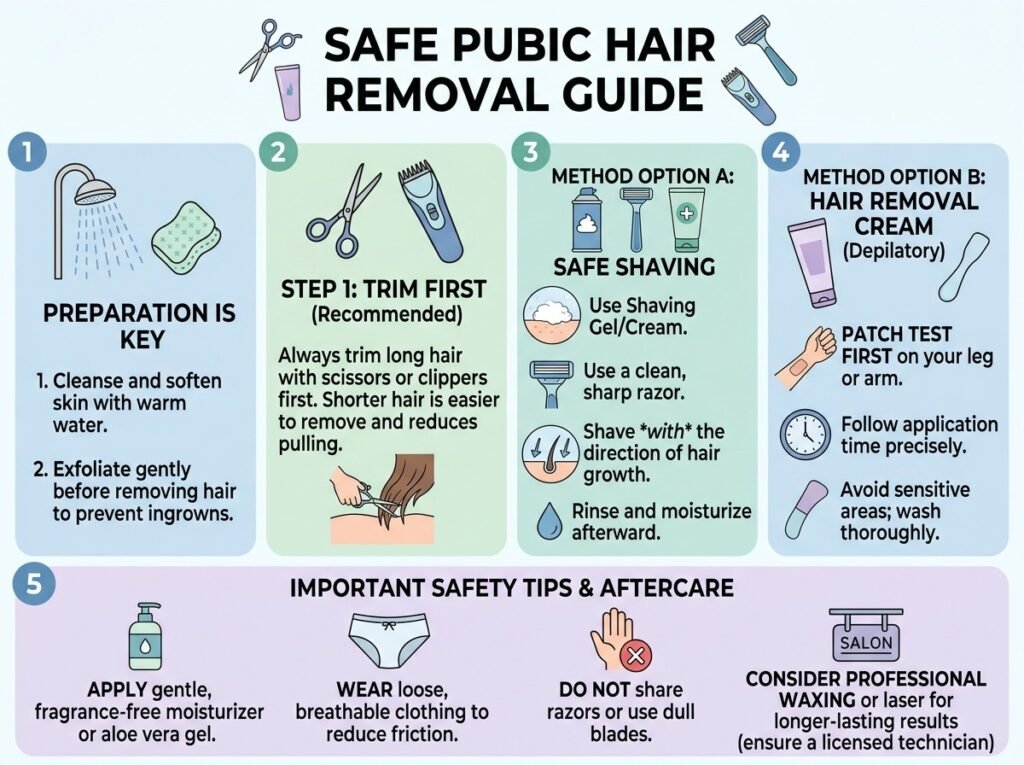
Comparing Pubic Hair Removal Methods
Each technique comes with distinct tradeoffs in terms of longevity, skin irritation risk, and maintenance:
| Method | Results Duration | Irritation / Ingrown Risk | Best Used For | Key Safety Rule |
| Trimming (Scissors / Electric) | Ongoing | Lowest (No skin contact) | Maintenance & reducing bulk | Use guarded electric clippers; never touch open blades to fold areas. |
| Wet Shaving | 1 to 3 days | High (Causes blunt ends & razor burn) | Quick, low-cost smoothness | Always shave in the direction of hair growth with a clean, sharp blade. |
| Depilatory Creams | 4 to 7 days | Moderate to High (Chemical irritation) | Bikini line (outer edges only) | Never apply inside labia or mucosal tissue. Use formulas labeled for bikini areas. |
| Waxing / Sugaring | 3 to 6 weeks | Moderate (Follicle trauma) | Long-lasting smoothness | Avoid hot wax on thin skin; refrain from tight clothing for 48 hours post-wax. |
| Laser / IPL | Long-term / Permanent | Low to Moderate | Permanent hair reduction | Perform patch tests and avoid tanning or sun exposure before treatments. |
Step-by-Step Safe Wet Shaving Protocol
If you choose to shave your pubic hair, following a strict hygienic protocol prevents razor bumps, cuts, and deep ingrown strands.
- Trim Long Hair First:
Prevents the razor from clogging and pulling at longer hair strands.
Use electric clippers with a guard or small safety scissors to trim long pubic hair down to roughly 1/4 inch. Shaving long hair directly forces razor blades to drag, causing painful tugging and quick dulling.
- Soak in Warm Water for 5 Minutes:
Softens coarse pubic hair and hydrates the skin barrier.
Take a warm shower or bath for at least 5 minutes before shaving. The warm water and steam soften coarse hair shafts and open up pores, making the hair significantly easier to slice cleanly.
3. Apply a Fragrance-Free Shaving Gel:
Creates a protective lubricated barrier for the razor blade.
Coat the area in a thick layer of fragrance-free, moisturizing shaving gel or cream. Avoid heavily scented body washes or soap bars, which strip natural lipids and irritate delicate mucous membranes.
4. Shave in the Direction of Hair Growth:
Prevents hair shafts from cutting below the follicle surface. Pull the skin taut with one hand and glide a sharp, single- or fresh multi-blade razor lightly with the grain (the direction the hair grows). Do not press hard or shave repeatedly over the same spot.
5. Rinse with Cool Water & Pat Dry:
Closes pores and calms inflammation immediately.
Rinse the area thoroughly with cool water to soothe the skin and close pores. Gently pat dry with a clean towel (do not rub) and apply a gentle, fragrance-free moisturizer or aloe vera gel.
Essential Rules to Prevent Infection & Bumps
- Never share razors or use dull blades: Change your razor blade after every 3 to 5 shaves. Old blades harbor bacteria and develop microscopic jagged edges that tear thin pubic skin, causing folliculitis.
- Keep chemicals away from inner mucosal tissue: If using bikini hair removal creams, keep products strictly on the outer bikini line. Never let depilatory creams touch internal or highly sensitive genital tissue, as high chemical pH levels can cause severe mucosal burns.
- Wear loose, breathable cotton underwear post-removal: Tight synthetic underwear traps sweat and bacteria against freshly exfoliated pores, exacerbating friction and driving freshly cut hair tips back into the skin.