
Deep tissue massage is a specialized therapeutic technique designed to reach sub-layer muscles and connective tissues (fascia). Unlike general relaxation treatments, it uses slow, deliberate strokes and firm, targeted pressure to physically break down adhesions—commonly referred to as “knots”—that cause chronic pain, stiffness, and restricted movement.
By targeting deep anatomical structures, this therapy restores flexibility, improves blood circulation, and promotes physical recovery from chronic strain or injuries.
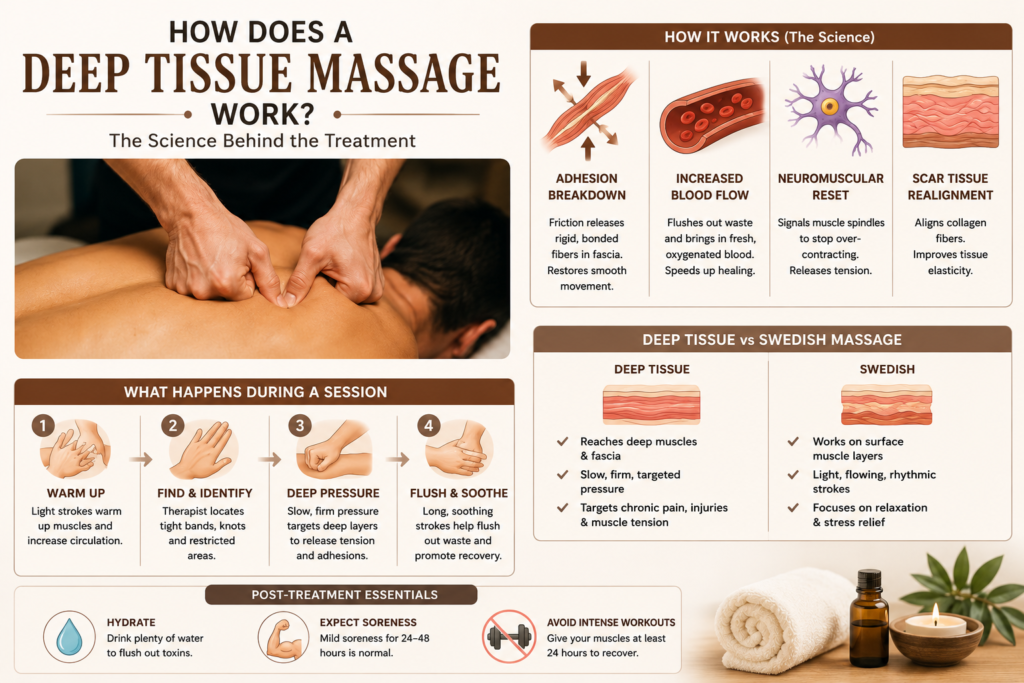
The Science: How Deep Pressure Transforms Muscle Tissue
Deep tissue therapy works through a combination of mechanical force and physiological responses within your soft tissue:
| Mechanism | Physiological Process | Primary Benefit |
| Adhesion Breakdown | Friction releases rigid, bonded collagen fibers in damaged fascia | Restores smooth movement between muscle layers |
| Hyperemia (Increased Blood Flow) | Firm pressure forces out metabolic waste and draws fresh oxygenated blood in | Accelerates tissue repair and reduces inflammation |
| Neuromuscular Reset | Sustained pressure signals muscle spindles to stop over-contracting | Releases involuntary muscle guarding and tension |
| Scar Tissue Realignment | Targeted cross-fiber friction aligns newly forming collagen fibers | Improves tissue elasticity after injury recovery |
Step-by-Step: What Happens During a Session
- Surface Preparation & Warming:
Warms up superficial tissues to prevent defensive tensing.
The therapist begins with lighter, sweeping strokes (effleurage) to warm up top-layer muscles, increase surface circulation, and signal the nervous system to relax.
2. Palpation & Spot Identification:
Locates specific areas of muscle contraction and fascial restriction.
Using hands, thumbs, or forearms, the therapist sweeps through muscle groups to pinpoint tight bands, rigid trigger points, or hardened knots that require focused attention.
3. Targeted Deep Pressure & Friction:
Applies slow, deep pressure across muscle fibers.
Using knuckles, elbows, or thumbs, the therapist applies slow, intense pressure directly across or along the grain of the muscle fibers (cross-fiber friction) to unbind locked tissues.
4. Tissue Flushing & Cooling:
Flushes out released metabolic waste products.
The session ends with long, soothing strokes to flush released metabolic byproducts (like lactic acid) out of the tissue into the lymphatic system.
Deep Tissue vs. Swedish Massage: Key Differences
- Target Depth: Swedish massage targets only the outermost muscle layers, whereas deep tissue penetrates through upper layers to work on deep fascia and tendons.
- Technique Speed: Deep tissue uses significantly slower strokes with heavy, sustained pressure to allow deep muscle fibers to lengthen gradually without tensing up defensively.
- Treatment Intent: Swedish massage prioritizes stress relief and general relaxation; deep tissue targets chronic pain relief, postural correction, and sports injury rehabilitation.
Essential Post-Treatment Rules
- Hydrate immediately: Drink plenty of water after your session to help your kidneys flush out metabolic waste released during deep muscle manipulation.
- Expect mild tenderness: Sensations similar to post-workout soreness are normal for 24 to 48 hours following a deep tissue treatment.
- Avoid intense workouts: Allow your muscles at least 24 hours to recover before engaging in strenuous heavy lifting or high-intensity cardio.