
Stepping into a spa can feel wonderfully calming, but looking at a 10-page treatment menu full of technical terms can quickly cause decision fatigue. With options ranging from deep tissue work and thermal hydrotherapy to high-tech anti-aging facials and herbal body wraps, picking the wrong service can lead to post-massage soreness, skin irritation, or simply feeling like you didn’t get what you paid for.
Choosing the right spa treatment isn’t about picking the most expensive option on the menu; it’s about matching your body’s current physiological state—whether that’s muscle fatigue, skin dehydration, stress-induced anxiety, or sluggish circulation—with the right therapeutic technique.
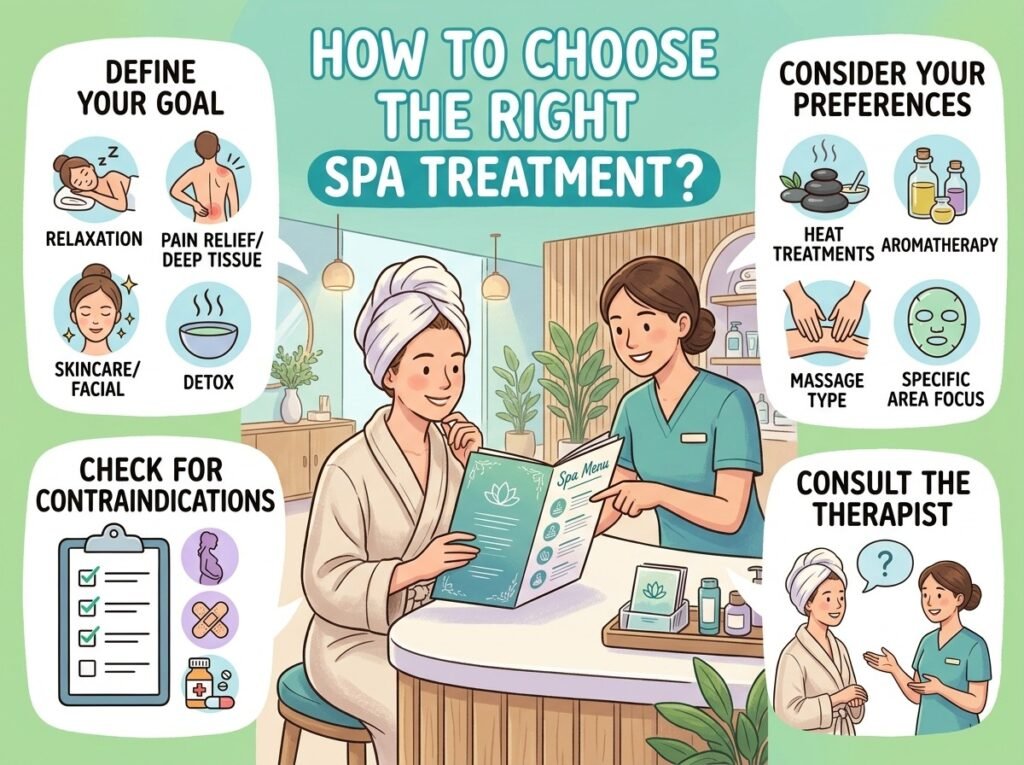
Matching Treatments to Your Primary Wellness Goal
Before booking, clarify your main objective. Are you trying to fix a physical issue, reset your skin, or completely disconnect mentally?
| Primary Need / Goal | Recommended Spa Treatment | Target Benefit | What to Avoid |
| Desk-Job Tension & Knots | Deep Tissue Massage or Hot Stone Therapy | Releases deep fascial tightness and breaks down muscle knots | Gentle Swedish massage (too light for dense tension) |
| Mental Fatigue & Stress | Aromatherapy Massage or Swedish Massage | Lowers nervous system arousal and reduces cortisol levels | Heavy extractions or aggressive deep tissue work |
| Dull, Dry, or Aging Skin | Hydrating Facial (Hyaluronic/Collagen) or Body Wrap | Plumps skin cells, restores moisture barriers, and boosts glow | Harsh chemical peels right before sun exposure |
| Full Body Detox & Renewal | Hammam Ritual, Salt Scrub, or Seaweed Wrap | Exfoliates dead skin and stimulates lymphatic drainage | Deep manual face massage on acne-prone skin |
| Special Occasion / Couples | Hydrotherapy Bath + Tailored Dual Ritual | Promotes deep relaxation, warmth, and shared connection | Fast-paced express treatments |
If you’re booking at short notice, our quick-match guide to spa treatments by wellness goal gives you an answer in a few minutes.
Step-by-Step Selection Process
- Pinpoint Your Primary Physical Concern:
Identifies whether your body needs physical manipulation or skin restoration. Ask yourself what your body is asking for right now. If your neck and shoulders feel locked, prioritize bodywork (massage). If your face feels tight, dry, or break-out prone, prioritize skin therapy (facials). If you feel sluggish overall, consider thermal body treatments (scrubs, wraps, or steam).
2. Check Skin Type & Medical Conditions:
Ensures your skin barrier and underlying tissues tolerate the service. Assess your skin’s current state and your physical health. If you have sensitive skin, rosacea, or are pregnant, notify the spa in advance. Avoid heavy heat treatments or intense physical pressure if you suffer from high blood pressure, recent injuries, or acute inflammation.
3. Determine Ideal Duration & Intensity:
Aligns the session length with your energy levels. Be realistic about how long you want to lie still. A 50-minute session is ideal for targeted area relief (e.g., back and shoulders or a mini-facial). A 90- to 120-minute ritual allows your parasympathetic nervous system to fully take over, making multi-treatment packages (scrub + massage + facial) ideal for deep stress resets.
- Have an Honest Pre-Service Consultation:
Customizes pressure, products, and target zones on the spot.
Never skip filling out your health intake form, and talk to your therapist before they start. Clearly communicate your preferred pressure (light, medium, deep), areas that need extra focus, and any scent or ingredient allergies.
Pro Rules for a Flawless Spa Experience
- Don’t eat a heavy meal right before: Lying face-down on a massage table for an hour after a large meal can cause stomach discomfort and indigestion. Eat a light snack 1 to 2 hours prior instead.
- Arrive 20 minutes early: Rushing into a treatment with a high heart rate counteracts the nervous system benefits. Arriving early lets you change, sip warm tea, and transition into a relaxed state before touch therapy begins.
- Speak up during the session: Therapists cannot guess what you feel. If the room is cold, the music is too loud, or the pressure hurts, tell your therapist immediately so they can adjust.
If you opt for a massage, our guide to how often you should get a body massage will help you plan follow-up sessions; if you choose a facial, read how to prepare for a spa facial first.
Explore more beauty guides: Facials & Skincare