
Shellac manicures offer the ultimate combination of high-gloss shine and flexible wear. However, when your manicure begins to grow out, taking it off incorrectly can ruin weeks of nail growth. Prying, scraping, or peeling off Shellac strips away the upper keratin layers of your natural nail plate, leaving them bendy, brittle, and prone to painful peeling.
Unlike hard gel extensions or thick acrylics, Shellac is a patent hybrid formula (half traditional polish, half gel). Because of its unique structure, it breaks down significantly faster under acetone—provided you follow the correct chemical process rather than relying on mechanical force.
Shellac vs. Hard Gel & Acrylic Removal
Understanding what makes Shellac unique helps you avoid over-treating your nails during removal:
| Removal Variable | Shellac (Hybrid Polish) | Hard Gel Extensions | Traditional Acrylics |
| Acetone Dissolve Time | 10 to 12 minutes | Non-porous (Must be filed off completely) | 25 to 30 minutes |
| Topcoat Buffing Needed? | Minimal (light breaking of top seal) | Heavy filing required | Moderate to heavy filing required |
| Post-Soak Consistency | Flakes off like soft tree bark | Remains rigid unless filed | Turns into a thick, gummy jelly |
| Natural Nail Risk | Low (if soaked properly) | High (if over-filed) | Moderate to High (if scraped forcibly) |
Step-by-Step Safe Shellac Removal Routine
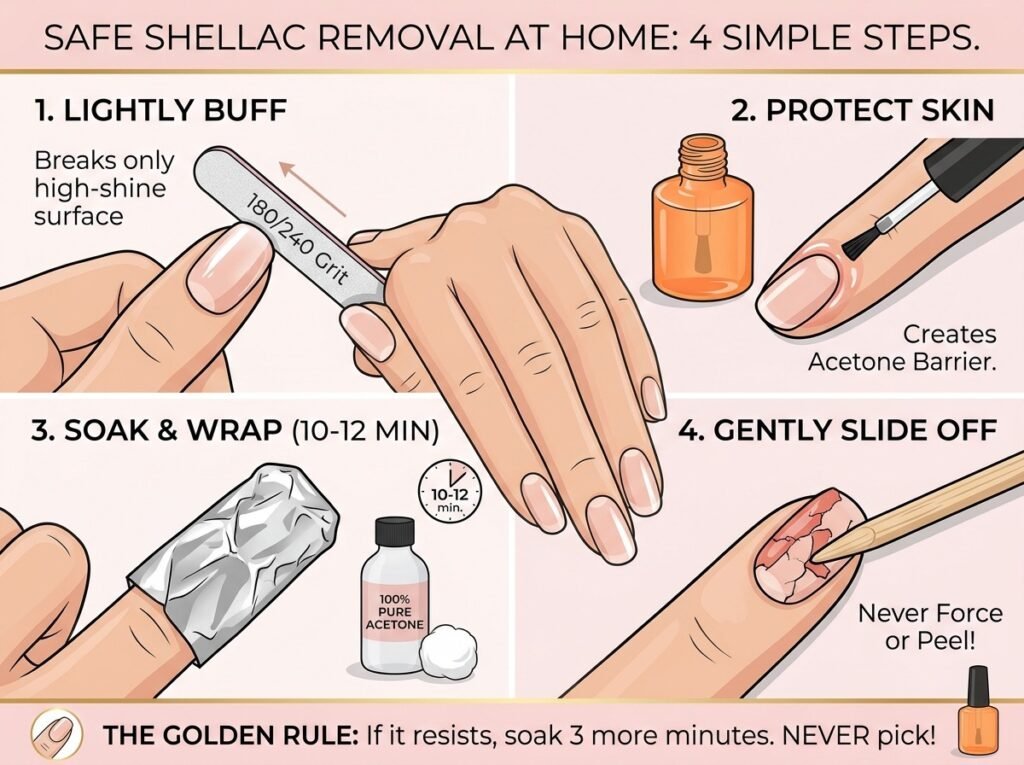
- Lightly Break the Top Seal:
Allows acetone to penetrate the shiny protective seal. Take a fine-grit nail file (180/240 grit) and gently buff the high-shine surface layer of your Shellac polish. You do not need to scrub off the color—just break the shiny barrier so the solvent can reach the porous gel layers underneath.
2. Apply a Cuticle Moisture Shield:
Protects delicate skin from drying out during acetone contact. Apply a generous coat of cuticle oil, petroleum jelly, or thick hand cream over the skin surrounding your nails and along the cuticles. This acts as a barrier to keep 100% pure acetone from stripping natural oils from your skin.
3. Saturate & Foil-Wrap Each Fingertip:
Traps body heat to accelerate chemical breakdown. Soak a small piece of a cotton ball or pad thoroughly in 100% pure acetone. Place it directly over the nail bed, taking care to minimize contact with skin, and wrap a square of aluminum foil tightly around the tip to seal in heat. Let sit undisturbed for 10 to 12 minutes.
4. Gently Push Off & Hydrate:
Slides polish off effortlessly without scraping natural keratin. Unwrap one finger at a time. The Shellac should look cracked, lifted, and flaked. Take a wooden orange stick and gently glide the flaked polish off the nail plate. If any spot resists, re-wrap for another 3 minutes—never pick or force it. Finish by washing your hands and massaging a rich cuticle oil into your nail beds.
Pro Rules for Post-Shellac Recovery
- Always use 100% pure acetone: Non-acetone polish removers contain too much water and lack the solvent strength to break down cured Shellac. Trying to use them forces you to scrub aggressively, damaging your nail beds.
- Warm your hands during the soak: Cover your foil-wrapped hands with a warm, dry towel while waiting. Heat speeds up the acetone reaction, allowing the polish to slide off effortlessly.
- Rehydrate your nails immediately: Acetone temporarily dehydrates natural keratin. Apply a lipid-rich cuticle oil containing jojoba oil or sweet almond oil twice daily for 48 hours post-removal to restore flexibility.